
Last Updated: June 18, 2026
IBPS PO Vacancy & Salary 2026: In-Hand Pay, Perks & Career Growth
Before filling the IBPS PO application form, every candidate should understand two things clearly: how many vacancies are available and what the actual salary package looks like. This guide breaks down the vacancy trends, salary structure, allowances, and career growth path in plain language — so you know exactly what you’re getting into.
If you’re wondering whether IBPS PO is worth the effort, the numbers speak for themselves. With an expected 5,000+ vacancies and an in-hand salary of around ₹76,000 per month, it remains one of India’s most attractive government jobs. Let’s look at the facts.
📘 Table of Contents
- Introduction: Why Vacancy & Salary Matter
- IBPS PO Vacancy 2026: Expected Numbers
- Year-Wise Vacancy Trend (2021-2025)
- Expected Vacancy for 2026
- IBPS PO Salary 2026: Complete Breakdown
- Basic Pay & Pay Scale
- Complete Salary Structure
- In-Hand Salary Calculation
- Allowances & Perks
- Career Growth & Promotion Hierarchy
- IBPS PO Salary vs Other Banking Jobs
- Frequently Asked Questions
- Suggested Next Reads
⚡ Quick Summary – IBPS PO Vacancy & Salary 2026
- Expected Vacancy 2026: 5,000 to 5,500 positions across 11 public sector banks
- 2025 Vacancy: 5,208 positions
- Starting Basic Pay: ₹48,480 (as per 12th Bipartite Settlement)
- Gross Salary: Approximately ₹90,733 per month
- In-Hand Salary: ₹74,000 – ₹76,000 per month
- Career Growth: 10-level promotion hierarchy from PO to Chairman & Managing Director
- Key Perks: DA, HRA, medical benefits, NPS pension, subsidized loans, LTC, performance bonuses
Introduction: Why Vacancy & Salary Matter Before You Apply
Every year, over 10 lakh aspirants apply for the IBPS PO exam, competing for approximately 3,000-5,000 positions across 11 public sector banks. But here’s the reality — most candidates focus entirely on exam preparation and completely ignore two critical factors that determine their future: vacancy trends and salary structure.
Understanding vacancy trends helps you gauge competition levels and plan your preparation strategy. A year with higher vacancies means better chances of selection. Similarly, understanding the salary structure helps you make informed career decisions. Many candidates assume they know what an IBPS PO earns, but the actual package includes numerous components beyond just the basic pay.
This comprehensive guide covers everything you need to know about IBPS PO vacancies and salary for 2026. Whether you’re a first-time aspirant or a repeat candidate, this article will give you a clear picture of what to expect.
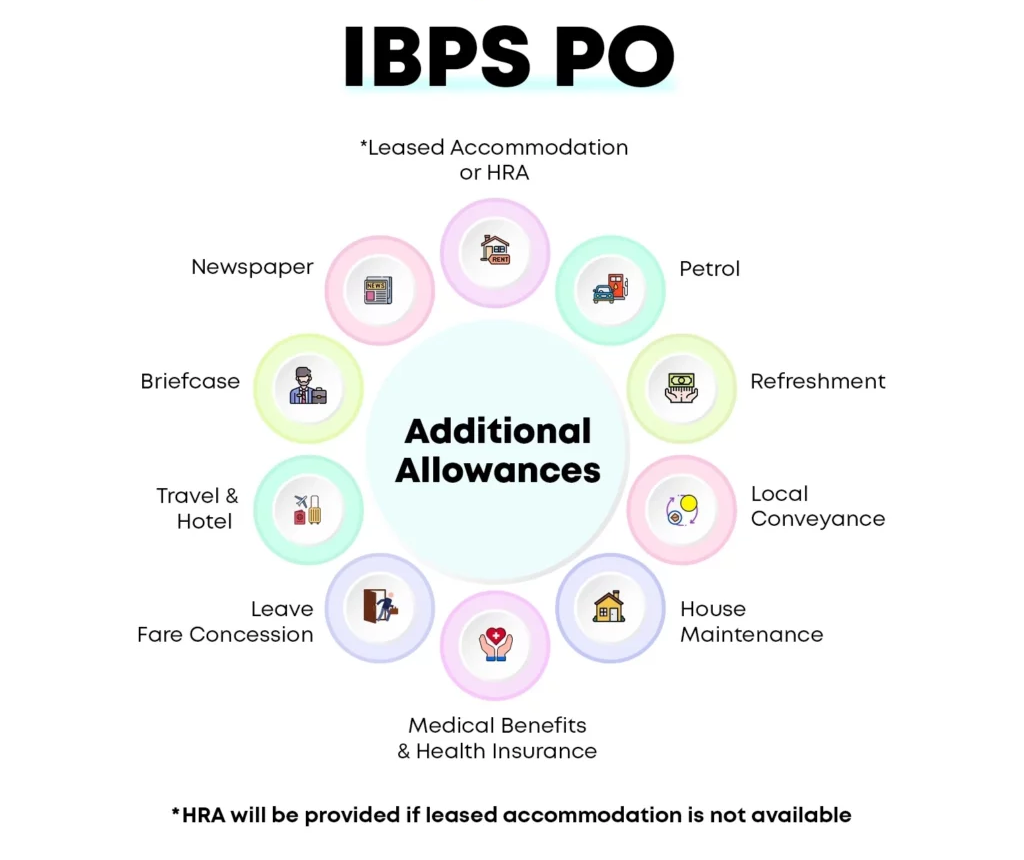
Complete IBPS PO Salary Benefits Provided
IBPS PO Vacancy 2026: Expected Numbers
IBPS announces the official vacancy list along with the notification every year, typically between June and August. The 2026 notification is expected around July 2026. Since the official numbers aren’t out yet, we rely on historical data to estimate the expected vacancies.
The number of vacancies varies each year based on multiple factors: retirement of existing officers, branch expansion plans, bank mergers, government policies, and each bank’s specific manpower requirements. Understanding these patterns helps aspirants gauge competition levels and plan their preparation accordingly.
Year-Wise Vacancy Trend (2021-2025)
Here’s the complete data from the past five years. Notice how vacancies fluctuate significantly from year to year:
| Year | Total Vacancies | Change from Previous Year | Key Observations |
|---|---|---|---|
| 2021 | 4,135 | — | Post-pandemic recovery hiring |
| 2022 | 6,432 | ⬆ 55.6% | Highest in recent years |
| 2023 | 3,049 | ⬇ 52.6% | Sharp decline due to bank mergers |
| 2024 | 5,973 (Revised) | ⬆ 95.9% | Strong rebound |
| 2025 | 5,208 | ⬇ 12.8% | Stable, healthy hiring |
Source: IBPS official notifications
Vacancy numbers depend on several factors: retirement of existing officers (typically 3-5% of the workforce retires annually), branch expansion plans of participating banks, bank mergers (like the consolidation that happened in 2023), government policies on banking sector growth, and each bank’s specific manpower requirements based on business expansion.
As you can see, 2022 had the highest number of vacancies in recent years at 6,432, while 2023 saw a sharp decline to 3,049 due to bank mergers. 2024 rebounded strongly with 5,973 vacancies, and 2025 maintained a healthy 5,208 positions. A dip in one year is often followed by a rebound, so don’t be discouraged by a single year’s numbers.
Expected Vacancy for 2026
Based on the 5-year trend and the fact that 2025 had 5,208 vacancies, experts estimate the IBPS PO 2026 vacancies to be in the range of 5,000 to 5,500.
Several factors support this estimate:
- Retirement cycles: A significant number of officers are expected to retire in 2026, creating vacancies
- Branch expansion: Several public sector banks are planning branch expansions in semi-urban and rural areas
- Government focus: The government has emphasized strengthening the public sector banking workforce
- Digital transformation: Banks need more officers to handle digital banking operations
The final number will be confirmed only when IBPS releases the official notification, but the trend suggests a stable hiring pattern. Over 10 lakh candidates apply annually, making it a competitive but achievable goal with the right preparation.
IBPS PO Salary 2026: Complete Breakdown
The IBPS PO salary is governed by the 12th Bipartite Settlement, which came into effect from April 2024. This settlement significantly improved the pay scale compared to the 11th Bipartite Settlement (under which the basic pay was ₹36,000).
Here’s the complete breakdown of every salary component, from basic pay to in-hand salary.
1. Basic Pay & Pay Scale
The starting basic pay for an IBPS PO is ₹48,480 per month.
The full pay scale is: ₹48,480 – 2,000(7) – 62,480 – 2,340(2) – 67,160 – 2,680(7) – 85,920
Let’s decode this:
- You start at ₹48,480
- After 7 increments of ₹2,000 each, you reach ₹62,480
- After 2 increments of ₹2,340 each, you reach ₹67,160
- After 7 increments of ₹2,680 each, you reach a maximum of ₹85,920
2. Complete Salary Structure at Entry Level
Your total salary includes many components beyond the basic pay. Here’s the complete breakdown:
| Salary Component | Amount (₹) | Basis |
|---|---|---|
| Basic Pay | 48,480 | As per 12th BPS |
| Special Allowance | 12,847 | Fixed component |
| Dearness Allowance (DA) | 10,278 | ~23.87% of Basic (revised quarterly) |
| House Rent Allowance (HRA) | 4,848 | 7-9% of Basic (varies by city) |
| City Compensatory Allowance (CCA) | 2,300 | For metro/urban postings |
| Learning Allowance | 850 | Fixed monthly amount |
| Learning Allowance DA | 180 | DA on learning allowance |
| Gross Salary | 90,733 | Before deductions |
3. In-Hand Salary (Take-Home Pay)
While the gross salary looks impressive, your in-hand salary (take-home pay) is what you actually receive in your bank account after all deductions. Here’s a realistic calculation:
| Component | Amount (₹) | Type |
|---|---|---|
| EARNINGS | ||
| Gross Salary (Basic + Allowances) | 90,733 | Credit |
| DEDUCTIONS | ||
| NPS Employee Contribution (1% of Basic) | 485 | Debit |
| Professional Tax | 200-300 | Debit (varies by state) |
| Income Tax (TDS) | Varies | Debit (depends on deductions claimed) |
| Other Deductions | Varies | Debit (union fees, etc.) |
| NET IN-HAND SALARY | ₹74,000 – ₹76,000 | Monthly Take-home |
This is what you’ll receive in your bank account every month. The actual amount may vary slightly based on your city of posting, applicable state taxes, and personal tax deductions under sections like 80C, 80D, etc.
4. Allowances & Perks Beyond Salary
Beyond the monthly salary, IBPS PO officers enjoy numerous benefits that add significant value — approximately ₹2-3 lakhs annually. Here’s what you get:
A. Monetary Allowances
- Dearness Allowance (DA): ~23.87% of basic pay, revised quarterly to account for inflation
- House Rent Allowance (HRA): 7% to 9% of basic pay depending on city classification (Class X: 9%, Class Y: 8%, Class Z: 7%)
- City Compensatory Allowance (CCA): Up to 4% of basic pay for metro postings
- Learning Allowance: ₹850 per month for professional development
- Newspaper & Mobile Allowance: Monthly reimbursements
B. Insurance & Health Benefits
- Comprehensive Medical Insurance: Coverage for self, spouse, children, and dependent parents
- Life Insurance: Group term life insurance coverage
- Personal Accident Insurance: Coverage for accidental death or disability
C. Retirement & Long-term Benefits
- National Pension System (NPS): 14% employer contribution + 1% employee contribution
- Provident Fund: Employer contributes at applicable rates
- Gratuity: Payable at retirement or resignation after minimum service
- Leave Encashment: Option to encash accumulated privilege leave
D. Leave & Travel Benefits
- Leave Travel Concession (LTC): Travel reimbursement once every 4 years
- Casual Leave: 12 days per year
- Sick Leave: 15 days per year
- Privilege Leave: 30 days per year (accumulating)
- Maternity/Paternity Leave: Extended leave provisions
E. Other Perks
- Subsidized Loans: Housing, vehicle, and personal loans at preferential rates (typically 1-2% below market)
- Performance Bonus: Annual bonuses based on individual and bank performance
- Transfer Allowance: Lump sum for relocation expenses during transfers
- Children Education Allowance: Financial assistance for children’s education
- Club Membership: Access to officer clubs and recreational facilities
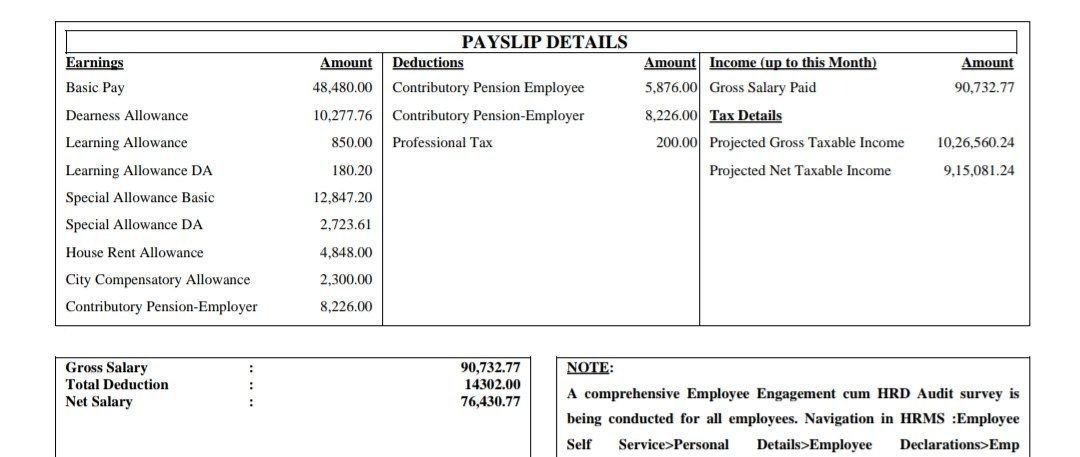
IBPS PO Monthly In-Hand Salary Breakdown
Career Growth & Promotion Hierarchy
One of the biggest draws of the IBPS PO role is the structured career progression. Starting as a Probationary Officer, you can rise through the ranks to become a General Manager or even a Chairman & Managing Director.
The promotion system operates on a combination of seniority and merit, with mandatory training programs at each level to ensure officers are equipped with necessary skills for higher responsibilities.
| Level | Designation | Approximate Years from PO | Salary Range (₹) |
|---|---|---|---|
| 1 | Probationary Officer (PO) | 0-2 years (probation) | 74,000 – 76,000 |
| 2 | Assistant Manager (Scale I) | After probation | 76,000 – 85,000 |
| 3 | Manager (Scale II) | 4-5 years | 95,000 – 1,10,000 |
| 4 | Senior Manager (Scale III) | 9-10 years | 1,20,000 – 1,40,000 |
| 5 | Chief Manager (Scale IV) | 14-16 years | 1,50,000 – 1,75,000 |
| 6 | Assistant General Manager (Scale V) | 18-20 years | 1,80,000 – 2,10,000 |
| 7 | Deputy General Manager (Scale VI) | 22-24 years | 2,20,000 – 2,50,000 |
| 8 | General Manager (Scale VII) | 26-28 years | 2,60,000 – 3,00,000 |
| 9 | Executive Director (ED) | 28-30 years | 3,50,000 – 4,00,000 |
| 10 | Chairman & Managing Director (CMD) | 30+ years | 4,50,000 – 5,00,000+ |
High-performing officers can progress faster through the ranks. Banks have performance-based acceleration schemes where exceptional performers can get early promotions or skip grades. Additionally, officers can apply for specialist positions in areas like risk management, treasury, international banking, and digital banking, which often come with faster career progression and higher compensation.
Starting at approximately ₹75,000 per month as a Probationary Officer, your salary can grow to ₹4-5 lakhs per month if you reach top management positions. This represents a 5-6x salary increase over a 30-year career, not including the compounding effect of inflation-linked Dearness Allowance increases and periodic pay commission revisions.
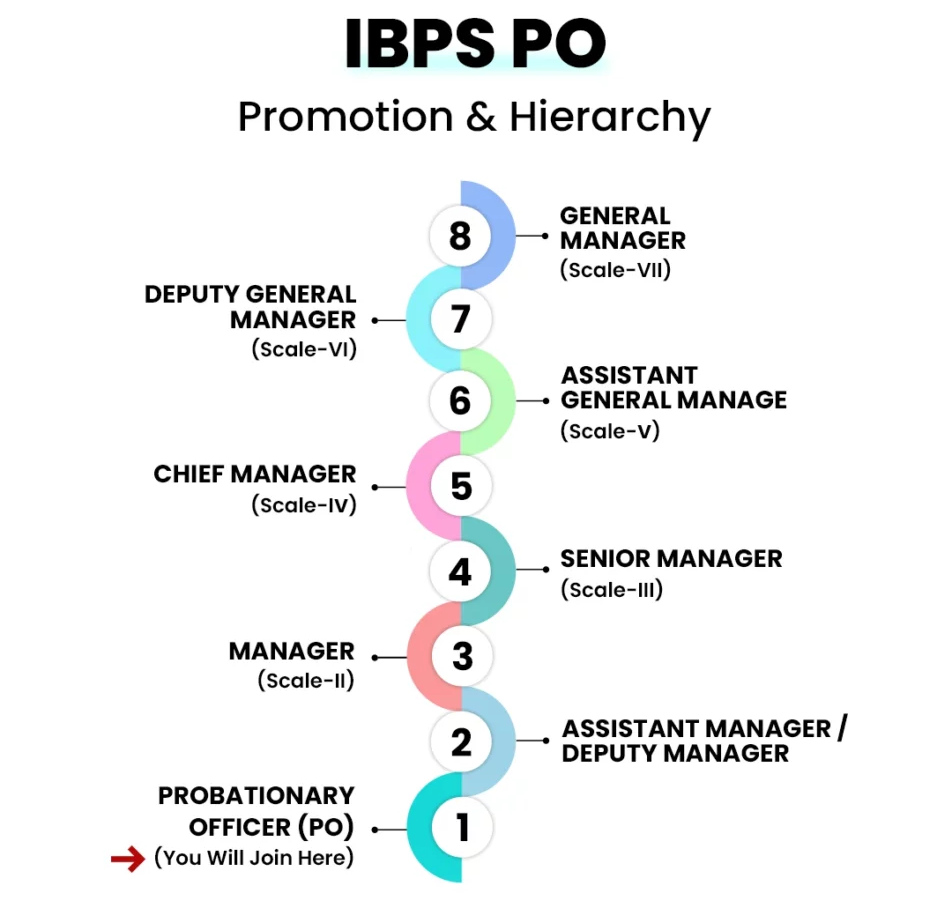
IBPS PO Career Growth & Promotion Hierarchy
IBPS PO Salary vs Other Banking Jobs
To help you understand how IBPS PO salary compares with other banking positions, here’s a comprehensive comparison with various bank job roles.
Comparison with Other IBPS Positions
| Position | In-Hand Salary (₹) | Career Growth |
|---|---|---|
| IBPS Clerk | 32,000 – 36,000 | Limited; can become Senior Clerk |
| IBPS PO | 74,000 – 76,000 | Excellent; can reach CMD level |
| IBPS SO (Specialist Officer) | 50,000 – 60,000 | Good in specialized domain |
| IBPS RRB Officer Scale I | 45,000 – 52,000 | Moderate; regional bank focus |
Comparison with Other Government Banking Jobs
| Organization | Position | In-Hand Salary (₹) | Key Differences |
|---|---|---|---|
| SBI | SBI PO | 75,000 – 80,000 | Slightly higher; India’s largest bank |
| RBI | Grade B Officer | 1,00,000 – 1,10,000 | Central bank; regulatory role |
| NABARD | Grade A Officer | 80,000 – 90,000 | Agricultural development focus |
| IBPS | PO | 74,000 – 76,000 | 11 bank options; pan-India posting |
Private Sector Banking Comparison
| Bank Type | Starting Salary (₹) | Job Security | Benefits |
|---|---|---|---|
| HDFC/ICICI/Axis | 40,000 – 60,000 | Moderate | Performance-based; variable pay |
| Kotak/IndusInd | 45,000 – 65,000 | Moderate | Growth-oriented; high sales pressure |
| IBPS PO (PSB) | 74,000 – 76,000 | Excellent | Comprehensive; pension benefits |
- Higher Starting Salary: IBPS PO offers better entry-level compensation than most private banks
- Job Security: Permanent position with virtually no layoff risk
- Work-Life Balance: Fixed working hours, unlike sales-driven private banking roles
- Pension Benefits: Guaranteed post-retirement income, unlike private sector
- Clear Career Path: Structured promotions vs uncertain growth in private banks
Frequently Asked Questions (FAQs)
Based on the 2025 vacancy of 5,208 and historical trends, the expected IBPS PO vacancy for 2026 is estimated to be between 5,000 and 5,500 positions. The official number will be confirmed when IBPS releases the notification, expected around July 2026.
The approximate in-hand salary for IBPS PO is around ₹74,000 to ₹76,000 per month after all deductions. The gross salary is approximately ₹90,733, and after deductions like NPS, professional tax, and income tax, this is the take-home amount you receive.
Yes, the salary structure is uniform across all 11 participating public sector banks as it is governed by the 12th Bipartite Settlement. However, allowances like HRA may vary slightly based on your city of posting. The basic pay and most allowances remain the same.
IBPS PO and SBI PO salaries are very similar. SBI PO in-hand salary is slightly higher (₹75,000-80,000 vs ₹74,000-76,000). Both offer excellent career growth and benefits. SBI has a larger branch network, while IBPS offers multiple bank options.
The career progression is well-defined and structured: from Probationary Officer → Assistant Manager → Manager → Senior Manager → Chief Manager → Assistant General Manager → Deputy General Manager → General Manager → Executive Director → Chairman & Managing Director. Promotions are based on seniority, performance, and clearing promotional exams.
During the 2-year probation period, you receive the full IBPS PO salary as mentioned (₹74,000-76,000 in-hand). There is no reduction in salary during probation. After successful completion of probation, you are confirmed as Assistant Manager (Scale I) and continue to receive increments and benefits as per bank policy.
Suggested Next Reads
Final Words
The IBPS PO role offers one of the most attractive compensation packages in India’s government sector. With an in-hand salary of ₹74,000-76,000 per month, comprehensive perks worth ₹2-3 lakhs annually, and a clear career progression path to top management, it’s a career that provides both financial stability and professional growth.
The vacancy trend shows consistent hiring, with 5,208 positions in 2025 and an expected 5,000-5,500 in 2026. Competition is high — over 10 lakh candidates apply each year — but the rewards are worth the effort.
If you meet the eligibility criteria, start your preparation early. Understand the exam pattern, focus on your weak areas, and stay updated with current affairs. With the right strategy and consistent effort, the IBPS PO exam can be your gateway to a prestigious banking career.
📌 Bookmark this page for quick reference, stay updated with official notifications, and start your preparation early to stay ahead of the competition.